During the 2023 legislative session, the Colorado Children’s Campaign helped lay the groundwork for important changes to make our state’s approach to funding public schools more fair and effective. We successfully advocated for continuous coverage for the youngest kids enrolled in Medicaid – an important step toward making sure children aren’t missing important health care services. We supported new funding for family planning clinics in the state that will help improve outcomes for kids and families. We helped improve access to justice for people facing eviction, knowing that families with very young children are most likely to experience these devastating events.
We also released a KIDS COUNT in Colorado! report that featured the most comprehensive set of data on youth mental health we had ever included, including a first-of-its-kind analysis of access to mental health providers and counselors in Colorado schools. We advanced important policy conversations on issues ranging from school safety to quality in early childhood.
And we connected with our community at some of our favorite events, including our Speak Up for Kids advocacy day and our annual Connection Reception.
The motto of the Colorado Children’s Campaign is simple but powerful: Every Chance for Every Child. I am proud to lead this team as we build on our history of turning this powerful dream into reality for kids and families through equitable, evidence-based, child-centered policy, research, and advocacy.
Thank you to all our supporters and partners and team members who share this dream – and who help us make it a reality.
Onward!
Heather Tritten
President and CEO
The Children’s Campaign released the annual KIDS COUNT in Colorado! report in August 2023. Building Understanding: Youth Mental Health and Well-Being in Colorado brought together data from national, state, and local sources to spotlight trends in youth mental health and access to care. The report also highlighted promising programs and efforts to support youth mental health across the state.
For the first time, the 2023 report included quotes from young people as part of a partnership with the YouthScan Project, a statewide digital initiative that puts youth voices front and center in the decisions that impact their lives.
SPEAK UP FOR KIDS!
In 2023, our signature advocacy event, Speak Up for Kids Day, returned to an in-person
format for the first time since 2020. The event was hosted at History Colorado Center
with support from our partners at Clayton Early Learning. More than 100 attendees
learned about key issues affecting Colorado kids, shared stories, and practiced their
advocacy skills with legislators.
CONNECTION RECEPTION
The Campaign’s Connection Reception brings together Coloradans from across sectors
and across the state who are invested in the well-being of kids and families. This year,
attendees heard from Gov. Jared Polis and celebrated our first-ever Advocate of the Year
and Legislator of the Year.
Advocate of the Year
Khatira Amn, Senior Policy Advocate for Early Childhood, for her work advocating for language justice and access in early childhood and in the policymaking process.
Legislator of the Year
Representative Iman Jodeh, House District 41, for her work to support families' economic stability, access to health care, and education.
FAMILY ECONOMIC PROSPERITY
North Star Goal: All families have safe, stable housing and the financial resources they need to support their well-being and achieve economic prosperity.
Priority Bills
Remote Access for Eviction Proceedings: HB23-1186
(Lindsay & Jodeh, Exum & Jaquez Lewis)
Allows all parties in a residential eviction proceeding to choose whether they intend to participate in person or virtually, extending an effective pandemic-era practice.
CHILD AND FAMILY HEALTH
North Star Goal: All families have comprehensive health insurance, strong social support, high quality perinatal and reproductive health services and ample amounts of healthy food.
Priority Bills
Multi-Year Continuous Eligibility for Medicaid and CHP+: HB23-1300
(Sirota & Bird/Zenzinger & Kirkmeyer)
Allows the state to provide continuous Medicaid and Child Health Plan Plus (CHP+) coverage to children from birth to age 3 and to provide 12 months of coverage for Coloradans leaving state prison.
Access to Reproductive and Preventive Health Services: SB23-189
(Moreno & Cutter/Michaelson Janet & Garcia)
Reduces surprise billing, removes patient cost-sharing for reproductive health care services offered to privately insured Coloradans, and codifies coverage of Affordable Care Act preventive services in Colorado.
YOUTH SUCCESS
North Star Goal: All youth believe they belong, feel vital to their communities, and have the resources, opportunities, and support they need to thrive in adolescence and beyond.
Priority Bills
Public School Finance Act: SB23-287
(Zenzinger & Lundeen, McLachlan & Kipp)
Creates a task force of school experts to deliver specific recommendations for a modernized, equitable, and student-centered school finance formula by January 2024.
EARLY CHILDHOOD
North Star Goal: All children have equitable, high-quality early childhood experiences shaped by well-supported families, caregivers, and educators that foster social-emotional development, health and overall well-being.
Priority Bills
Child Care Contribution Tax Credit Renewal: HB23-1091
(Pugliese & Kipp/Marchman & Rich)
Renews the Child Care Contribution Tax Credit (CCTC) for an additional three years.
Retain Revenue for Universal Preschool: HB23-1290
(McCluskie & Sirota/Moreno & Fields)
Refers a question to November 2023 voters about whether to retain excess revenue raised from Proposition EE, a ballot measure Coloradans passed overwhelmingly in 2020.
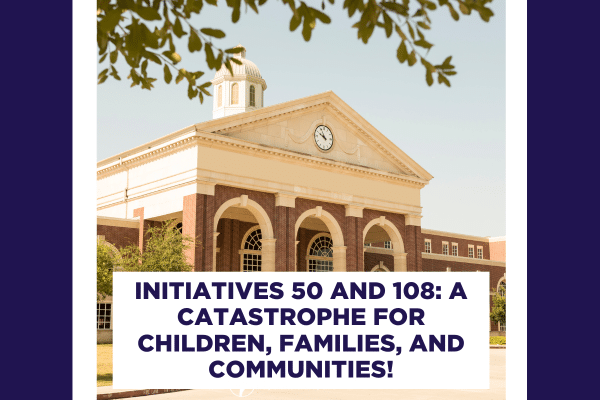
When Coloradans get their ballots in the mail this fall, they could potentially vote on two measures that would have disastrous consequences for Colorado kids and families if passed:
Initiative 108 would cut property tax assessment rates and require the state to reimburse local governments for the lost revenue. The Governor’s Office has estimated this would result in cuts totaling between $2.2 and $3 billion from existing programs and services in the state budget in the first year alone.
Initiative 50 would change our state’s constitution to create a 4% annual growth cap on property tax revenue and require statewide voter approval for any community to keep property tax revenue above the cap. This would result in an estimated loss of $550 million in 2026, $1 billion in 2027, and increasing amounts in future years.
Initiatives 108 and 50 would dramatically limit the resources available for critical services and programs that support children and their families at the state and local levels. Any services and programs funded by Colorado state General Fund dollars would be at risk of cuts or elimination if either of these proposals passes.
How might these measures impact children’s programs and services at the state level?
Cuts to Public Education & the Return of the Budget Stabilization Factor
The Department of Education (CDE), which administers and oversees the state’s public education system, receives 64% of its funding from the General Fund. CDE sets and administers state academic standards and assessments, distributes all state and federal funding to the state’s 178 school districts, manages educator licensure and professional development programs, and is responsible for services for students with special learning needs, students learning English, and public school transportation.
If these initiatives pass, the state budget will revert to the conditions that led to the Budget Stabilization Factor (BSF), a budgeting mechanism that cut $10 billion from public schools in less than 15 years. The state was forced to create the BSF when the 2009 global financial crisis caused a sudden 10% dropin state revenue and the state could not make enough cuts to other services to meet its constitutional responsibility to fund public education. If these initiatives pass, the state will cut its budget for public education and will have to institute a new version of the BSF.
With or without the return of the BSF, if these initiatives pass, any hope of improving Colorado teacher pay any time soon will also vanish. Cutting district budgets each year by
hundreds of millions of dollars will make it impossible for districts to keep teacher pay competitive with other professions or teachers in nearby states.
The passage of these ballot measures will put numerous education services and programs at risk:
New Public School Funding Formula: Passed in 2024, this formula would equitably distribute funding across schools and increase overall school funding by $500 million.
New Statewide Longitudinal Data System: Passed in 2024, this effort would help the state better align and deliver services across early childhood, K12 education, postsecondary and workforce systems.
Healthy School Meals for All (HSMA): In 2024, the state contributed $7.4 million from the General Fund to keep the school lunch program going. Some 230,000 Colorado students were served breakfast and lunch throughout the school year because of this program.
CSI Mill Levy Equalization: Charter schools authorized by the Charter School Institute (CSI) have access to mill levy equalization funds to reduce inequitable funding between students in district public schools and charter public schools.
Career Development Incentive Program (CDIP): Provides financial incentives to encourage high school students to complete qualified industry credential programs, internships, pre-apprenticeship or apprenticeship programs or qualified Advanced Placement (AP) courses. In FY2022-23, more than 20,000 students requested to participate.
Accelerating Students through Concurrent Enrollment (ASCENT): This fifth-year high school program allows students to participate in concurrent enrollment the year after 12th grade, enroll in postsecondary courses and earn college credit at no tuition cost to them or their families. This popular program serves 500 students each year.
Colorado Academic Accelerator Grant Program: This grant program funds the creation or expansion of community learning centers that offer STEM academic and enrichment activities during out-of-school time.
High-Impact Tutoring Program: Following the pandemic, the state established this program to deliver intense, targeted support with repeated tutor-student interactions to help students recover from any lost learning. Dozens of Colorado schools are leveraging these dollars to deliver academic support to students in need.
Cuts to Child Care & Early Childhood Programs
The Colorado Department of Early Childhood (CDEC) receives 38% of its funding from the state General Fund. CDEC is Colorado’s newest cabinet-level state agency and is tasked with the creation and management of a comprehensive early childhood system of programs and supports that serve all Colorado families with young children. Its primary programs include the Colorado Universal Preschool Program, the Colorado Child Care Assistance Program (CCCAP), Early Intervention Services, and early childhood provider licensing. CDEC staff also oversee the state’s family support programs and services, understanding that Colorado families deserve access to care, education, and holistic services to have the strongest start possible.
Dramatic reductions in the state’s General Fund would mean that Colorado cannot continue to expand preschool to more young children who need it most, serve students through the CCCAP program, or take other critical steps to serve the state’s youngest children.
If these ballot measures pass, the following programs, supports and services for Colorado’s youngest kids and families will be at risk:
Universal Preschool Program: Colorado’s Universal Preschool program, which launched in the 2023-24 school year, is focused on expanding access to preschool for 3- and 4-year-olds across the state. The program has the opportunity to support more children who face the most barriers to entering Kindergarten ready for school.
Colorado’s Child Care Assistance Program (CCCAP): CCCAP, which helps families that are homeless, working, searching for work or in school find low-income child care assistance, currently serves more than 25,000 children.
Early Intervention (EI): The state must provide early intervention services to all eligible infants and toddlers whose families seek these developmental services to maintain eligibility for certain federal funds. The monthly average of eligible children served is 8,786, and enrollment is trending up.
Universal Home Visiting: The Family Connects Program serves 12,000 births in nine counties in Colorado. Primary caregivers are offered a Family Connects visit shortly after their baby’s birth by being invited in the hospital or through referrals from community organizations, pediatricians, and OB-GYNs.
Provider Rate Increase: In 2024, the General Assembly approved a 2% provider rate increase for the early childhood workforce. This increase applies to providers paid through Family Resource Centers, Early Intervention, Nurse Home Visiting Program, Child Maltreatment Prevention, and Early Childhood Mental Health Services.
Child Care Licensing & Inspection: To ensure safety and quality, CDEC conducts licensing, inspection, and monitoring of child care facilities throughout the state.
Bilingual Child Care Licensing: This new program has already worked with 65 Spanish-speaking providers and provided 35 trainings in Spanish to child care providers.
Cuts to Health Insurance & Public Health Programs
The Department for Health Care Policy and Financing (HCPF) provides health insurance coverage to low-income and vulnerable children and adults through Medicaid and Child Health Plan Plus (CHP+). To assist with these costs, the HCPF receives federal matching funds and shares the responsibility for financing these programs. HCPF depends on General Fund dollars for 29% of its funding, and much of the federal funds HCPF receives require a state match. Over 1.7 million children and adults and 44% of Colorado births in 2022 were covered by Medicaid or CHP+.
The Department of Public Health and Environment (CDPHE) is responsible for protecting and improving the health of Coloradans through preventative public health programs, screening and testing, and data collection and sharing. CDPHE depends on the General Fund dollars for 17% of its funding.
Colorado has been a leader in health equity in recent years: The state began doula coverage under Medicaid just this year, made a fee waiver for CHP+ permanent, and expanded access to Medicaid for undocumented kids and pregnant adults beginning in 2025. Colorado has also slowly been lowering the rate of uninsured children in our state, with only 5% of children uninsured in 2022. These ballot measures would slow that progress toward ensuing kids have access to health care.
If these ballot measures pass, the following health programs, supports and services for Colorado kids and families will be at risk:
Colorado Health Plan Plus (CHP+): CHP+ covers primary care, emergency care, dental care, immunizations and maternity care for over 47,000 kids and pregnant/postpartum individuals.
Cover All Coloradans: This policy change provides comprehensive public health insurance coverage to children and pregnant and postpartum Coloradans regardless of immigration status. Over 2,000 pregnant and postpartum adults and more than 1,300 Colorado kids will gain coverage from this expansion beginning in 2025.
Healthy Kids Survey:The state’s most comprehensive survey to better understand youth health is supported by General Fund dollars. In 2023, more than 120,000 young people participated.
Family Planning Services: This program provides comprehensive reproductive care to more than 40,000 Coloradans at 80 clinics across the state, prioritizing people in low-income households and those who are uninsured.
School-Based Health Centers:School-based health centers provide primary medical, behavioral and oral health care to children, youth and young adults in schools. There are 72 traditional school-based clinics across the state and seven school-linked programs that collectively serve over 35,000 students.
Cuts to Economic Security Programs
The Department of Human Services (CDHS), which provides income, nutritional, and support services to assist families and individuals in need, receives 43% of its funding from the General Fund. CDHS houses programs such as Temporary Assistance for Needy Families (TANF), the federal Supplemental Nutrition Assistance Program (SNAP), and child support services.
The Judicial Department, which houses the Eviction Legal Defense Fund, collects and publishes data on eviction trends across the state, and ensures that families have meaningful access to due process in eviction proceedings, receives 75% of its funding from the General Fund.
Colorado has also made significant progress in the past several years to increase access to refundable state tax credits that support the economic security of families, including expansions of the state Earned Income Tax Credit and Child Tax Credit and creation of the Family Affordability Tax Credit. The estimated reduction in General Fund revenue if these ballot measures pass would place this progress in jeopardy.
If these ballot measures pass, the following economic supports and services for Colorado kids and families will be at risk:
Increased TANF Basic Cash assistance: More than 45,000 children experiencing extreme poverty received TANF basic cash assistance payments in 2022.
Child Support Pass-Through: This innovative policy allows about 3,000 families enrolled in the TANF program to receive child support payments rather than having to relinquish them to the state.
Eviction Legal Defense Fund: The ELDF supports nonprofit legal aid providers who provide free legal assistance to low-income renters at risk of eviction. There have been more than 30,000 evictions filed across Colorado this year and only 3% of renters facing eviction have legal representation.
Diaper Distribution Program: More than 215,000 families receive diapers through this program that exists in 81% of Colorado counties.
Family Resource Centers: More than 6,000 low-income families receive navigation, referral and assistance services through family resource centers across the state.
2-1-1 Colorado: The referral service that connects families to services such as income support, rent assistance, housing, and food, was contacted over 80,000 times between January and May 2024.
The birth to five years are some of the most important for a child’s growth, and the care and services children receive in this time can set the stage for their future development. Unfortunately, Colorado currently lacks information about many key aspects of early childhood in our state.
How many families in Colorado have multiple children under age 5 who need care? How many children are in different care settings? How many open spots do the state’s child care centers and preschools have – and how many does Colorado need? Which children and families are having trouble accessing child care or preschool and why? What programs support children and families when they transition to kindergarten, and how do we define a successful transition?
These are just a few of the many questions Coloradans should be able to answer but are unable to with the limited data and tools that exist in 2024.
Without data, policymakers and advocates will not be able to effectively serve children, families and early childhood providers, especially those who face the most barriers to accessing our current early childhood system. And without data, we cannot understand how access to early childhood services and supports during children’s most formative years affect their outcomes later in life.
A Complicated – but Necessary - Undertaking
Colorado is not the first state to grapple with this gap in information. While only two states (Georgia and Mississippi) fully link all early childhood data systems across all programs, at least 22 states link some or nearly all of their data, and 18 of those have built an Early Childhood Integrated Data System (ECIDS). A robust ECIDS allows states to track important data, including the number of children served by programs, families receiving benefits from multiple programs, and children who should be receiving services but are not.
The Colorado Department of Early Childhood, which began operations in 2022, has a mandate to collect comprehensive data to help answer some of these important questions. Collecting, publishing, and analyzing early childhood data is essential to the success of all programs facilitated by or housed within the Colorado Department of Early Childhood (CDEC) and to improving our understanding of and services for Colorado’s youngest residents.
The Department has already begun this complicated undertaking, in partnership with stakeholders in the early childhood space. It is clear, however, that this work will take a continued investment of time, funding, and commitment from the Governor, Legislature, and CDEC staff. As Colorado continues this important work, state leaders need to take steps to ensure they are creating a system that is effective, equitable, and accessible.
The Colorado Children’s Campaign recommends:
Creating a System That Is Comprehensive: Early childhood is often characterized by data silos, meaning that data, if they exist at all, are separated by program, department, or funding source (or sometimes all three). Individual data sets are not connected or analyzed collectively to determine how children and families are doing. For example, right now in Colorado, it is impossible to easily access up-to-date data on child care openings, early childhood program provider demographics, or universal preschool access for children of any specific racial or ethnic background. It is unclear if some of this data is collected at all.
Colorado’s ECIDS should be comprehensive, updated regularly, and able to provide a holistic overview of child and family access to all early childhood programs and supports, early childhood program provider demographics, and child and family outcomes, in the short and long term.
Connecting Early Childhood Data to Other Relevant Data Systems:The goal for an ECIDS (or any early childhood data collection system) is to track outcomes over time. To track those outcomes, any ECIDS created in Colorado should connect with our state’s K-12 data system and other relevant data systems across state agencies. As an example, this should include connections to systems that track information about public benefits for which families may also be eligible, even if those systems are governed by other state agencies.
Collecting and Sharing Disaggregated Data: Any data collected by the state should be disaggregated, at minimum, by the categories mandated in statute, which are: socioeconomic status, race, ethnicity, language, and disability. Data needs to also be available on a county-by county basis so local leaders can make the most informed decisions possible. The state should also collect and share information about the early childhood workforce, including Family, Friend, and Neighbor (FFN) providers, because children thrive when the adults taking care of them can also thrive.
Disaggregated data ensures that advocates and policymakers can identify gaps in access to early childhood programs and services, and in family and child outcomes, empowering advocates and policymakers to craft targeted policies that make the most impact for Colorado’s children and families facing the most barriers to opportunity.
Building Tools to Ensure Data Is Publicly Available and Publicly Accessible:The state needs to prioritize the management and strengthening of public dashboards or automated reports to promote transparency and ensure that early childhood stakeholders, including families and program providers, have access to regularly updated, de-identified, and disaggregated data. Dashboards should be designed to be read and understood by a wide audience and should be accessible to people whose first language is not English. Tools such as a multilingual data dictionary would support the state’s accessibility efforts.
Prioritizing Privacy: Any data system (ECIDS or otherwise) should adhere to confidentiality and use best practices in data stewardship to ensure the privacy of children, families, and providers. Staff at CDEC must comply with data confidentiality best practices when handling confidential, individual-level data, and CDEC must ensure that all publicly available data does not include any personally identifiable information about children, families, or providers. Families and providers must be able to trust the state with their information.
Fully Funding a Skilled and Collaborative Data Team: Data collection and analysis is a complicated, costly process which needs to be tended to with intentionality and attention to detail. Right now, the limited data that does exist isn’t analyzed in a timely manner because CDEC does not have enough staff with specialized expertise to respond to requests or manage projects.
Any projects associated with this effort must be fully funded to ensure the continued availability of functional technology and skilled staff at CDEC. Projects also need to be fully staffed by data managers, data analysts, and other appropriate staff. Raw data on its own can be confusing and possibly lead to misunderstandings. A fully staffed, skilled team can help external parties understand the data and what it truly means.
Promote a Culture of Growth and Trust:All state decisions should be made based on a transparent analysis of data about family, child, and provider experience in early childhood programs and services, with equity at the forefront of every conversation and decision. In order to do this, state legislators and state agency leaders need to actively prioritize a data-driven, equity-centered culture of growth and trust around data collection and analysis.
When data collection is founded only on the tenets of “accountability” or tracking funding, it can lead to distrust, fear, or even resistance. The result is a disconnected series of data silos that make it difficult (if not impossible) to identify and address data trends. Partnerships between CDEC and other state and local departments or agencies should include detailed data sharing agreements, in order to nurture a positive culture. The best, most effective progress for children and families is made within a culture of trust, collaboration, growth, and continuous improvement.
As 2024 began, Colorado families were struggling with the rising cost of living, which made it harder for many to afford essentials like child care, housing, and medical care. Young people were facing challenges resulting from years of inadequate and inequitable investment in public schools. Legislators were navigating complicated political dynamics and a tight budget as federal pandemic relief funding began to run out.
During the 2024 legislative session, the Colorado Children’s Campaign team focused on advancing policy changes to provide opportunities for children and help families thrive as our state and communities evolve.
We are pleased to report that the legislature took bold steps this year to support children’s well-being. These include updating our state’s approach to funding public schools for the first time in 30 years and passing policies that will do more to reduce child poverty than any state effort in recent memory.
Some of the most important efforts the Colorado Children’s Campaign supported in 2024 include:
Historic Investments in K-12 Education
A fair school finance formula and more funding for education: Since 1994, Colorado has used a school finance formula that sends more funding per student to school districts in some of the state’s wealthiest areas. HB24-1448 creates a new formula that will instead send more state funds to students living in poverty, students learning English, and students who have special needs. Also in 2024, the Joint Budget Committee fully funded public schools for the first time in a decade. These two decisions made the 2024 legislative session a historic year for investment in public education.
Money for out-of-school programs:HB24-1331 creates a grant program for organizations to provide academic enrichment and other services when school is not in session, such as before or after school or during the summer break. The grant program will serve about 15,000 young people each year. It is the state’s first permanent investment in out-of-school programs and will support programs that would likely have shut down as pandemic-era funding ran out.
Groundbreaking Steps to Support Family Economic Prosperity
Cutting Colorado’s child poverty rate in half: The Family Affordability Tax Credit created through HB24-1311 will put more money into the hands of families and help cut the child poverty rate in Colorado in half. This refundable tax credit for families with children prioritizes low-income families with young children. When combined with the Earned Income Tax Credit and Child Tax Credit, it has the potential to make Colorado’s child poverty rate the lowest in the country.
A tax credit for careworkers: Careworkers play a vital role in our communities, but their pay often does not reflect the value of their work. HB24-1312 provides a $1,200 refundable tax credit to certain child care and health care workers, helping support the people who provide children and families with the care they need.
Understanding evictions in Colorado: Babies and toddlers are more likely to be evicted from their homes than Americans of any other age. Colorado’s rates of eviction have soared in recent years. But the state does not have a thorough, accessible statewide data system that reports information about evictions. SB24-064 will improve the way Colorado collects and publishes data on eviction trends across the state, leading to better policy solutions to keep
families housed.
Building a Strong and Equitable Early Childhood System
Child care licensing resources in languages other than English:HB24-1009 will help Coloradans who speak Spanish access child care licensing resources so that young children and their families can access quality care in the language they speak at home.
An effective Colorado Department of Early Childhood: The Colorado Department of Early Childhood, which began operating in 2022, is growing and supporting a wide variety of programs to support early childhood. HB24-1332 extends the Department of Early Childhood’s executive rulemaking authority to allow it to run effectively.
Supporting Children’s Health and Well-Being
A better birth and postpartum care system: Health care before, during, and after birth can shape the future for babies and their families. HB24-1262 will improve data collection related to care during the perinatal period, identify ways to protect communities against health facility closures, create a map of maternal health care deserts, and build a process for reporting discrimination.
Support for reproductive health care:SJR24-008 highlights the importance of funding for health clinics that are part of Colorado’s Family Planning Program. It demonstrates Colorado’s support for making sure everyone has access to family planning and reproductive health care.
Healthy School Meals for All: In 2023-24, students across the state had access to free breakfast and lunch in schools through the Healthy School Meals for All program, which voters approved in 2022. The program faced funding challenges in its first year due to a combination of high enrollment, a change to the federal reimbursement rate, and the rising costs of food. The Joint Budget Committee identified a solution to fund universal school meals through the 2025-26 school year to make sure kids can continue to access healthy food at school.
How can we create every chance for every child in Colorado? It’s a question that is always with the Children’s Campaign team – and in recent years, we set out to come up with an answer that addresses the real needs of Colorado kids and families in the 2020s.
The result was a new strategic framework that will guide our work for years to come. It highlights goals and guiding North Star principles in four areas: Family Economic Prosperity, Youth Success, Child and Family Health, and Early Childhood. These are issues our team has worked on for years, but the new framework clarifies our commitment to advancing research, policy, and advocacy in these areas.
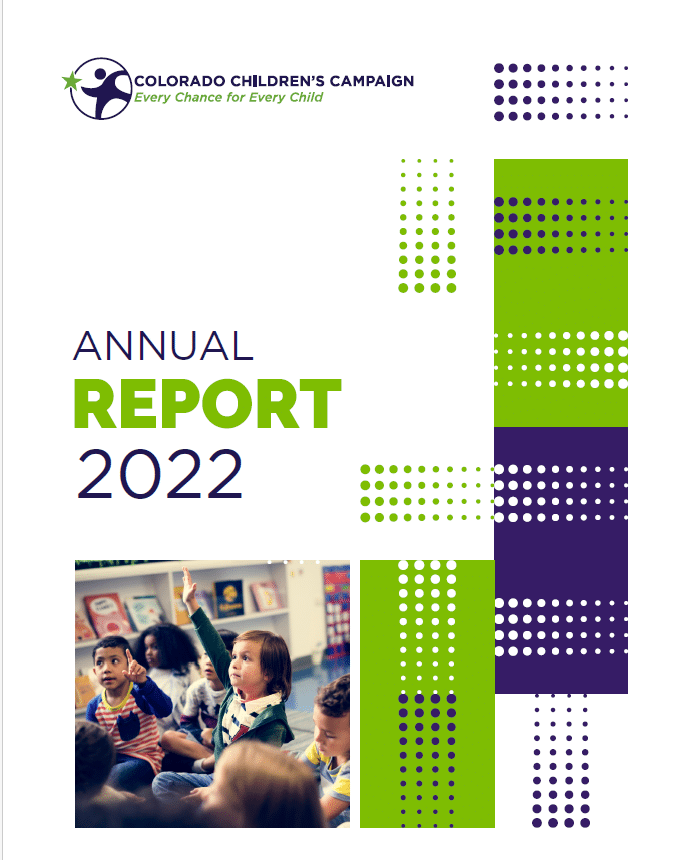
You will see that commitment reflected in our 2022 annual report.
In 2022, our team successfully advocated for bills that set the function and leadership of the new Department of Early Childhood. We expanded public health coverage to children, pregnant and postpartum undocumented Coloradans. We advocated for improvements to the Colorado Works (TANF) program. And we established new measures of student poverty and created a new fund that will help improve equity in funding across Colorado’s school districts. We also supported the passage of Proposition FF, which will provide free school meals to all public school students and help combat food insecurity. These are important steps toward creating a Colorado where our systems are truly serving all kids and families.
The Children’s Campaign team also convened or participated substantially in more than 20 coalitions across our issue areas. We were pleased to produce and share this year’s KIDS COUNT in Colorado! report, our most comprehensive portrait so far of how our state’s kids and families are faring in the aftermath of the pandemic. And we continue to connect with and learn from our powerful statewide community of advocates at Speak Up for Kids events and the first in-person It’s About Kids retreat since before the pandemic.
We are, as ever, grateful for the collaboration of our dedicated partners, advocates, and communities across the state. We are particularly appreciative of the many people who participated in the multiyear strategic planning process that led to the creation of our new framework. I know that the successes of 2022 will serve as building blocks from which to advance systems-level change in the years to come.
Thank you for your continued support for our work.
Kelly Causey, Ph.D., President and CEO
RESEARCH
The Children’s Campaign released the annual KIDS COUNT in Colorado! report in August 2022.A Pause on Progress: The Impact of the Pandemic on Colorado’s Kids brought together data from national, state, and local sources to create a portrait of Colorado’s kids well-being in the years immediately following the start of the COVID-19 pandemic. Our team found that thousands of Colorado kids lost a parent or primary caregiver to COVID-19 since March 2020, and many more have been harmed by the pandemic’s economic and educational effects. The report’s release was attended by more than 100 community members, and we presented the report in dozens of communities over the course of the year. Our research team also worked to ensure our policy agenda is evidence-based and advocated to ensure that our governments are collecting and sharing the data needed to understand and drive change in areas that matter for kids’ well-being.
ADVOCACY
In 2022, the Children's Campaign hosted the first in-person It’s About Kids (IAK) Network retreat since 2019. Our staff was joined by an incredible group of advocates from across the state. Our network of more than five dozen IAK leaders in 49 counties continued to play an essential role in informing our work throughout 2022.
Our signature advocacy event, Speak Up for Kids Day, was held virtually with support from our partners at Children’s Hosptial Colorado and Clayton Early Learning. More than 150 attendees learned about key issues affecting Colorado kids, shared stories, and practiced their advocacy skills with legislators.
We also hosted our first in-person annual event since the beginning of the pandemic. The Campaign’s first-ever Connection Reception was attended by more than 200 people from across sectors and across the state who are invested in the well-being of kids and families.
POLICY
EARLY CHILDHOOD
North Star Goal: All children have equitable, high-quality early childhood experiences shaped by well-supported families, caregivers, and educators that foster social-emotional development, health and overall well-being
In 2022, our early childhood team worked to support the implementation of the new Department of Early Childhood, create a groundbreaking universal preschool program, and bolster state support for the early childhood workforce. Our efforts were critical to ensuring the new department remained in alignment with the vision of caregivers, parents, providers, advocates, and community members. We worked closely with our partners to make sure that those who are most affected by changes to early childhood policy – families and providers – remain engaged as these new programs become reality.
Priority Bills
Early Childhood Educator Income Tax Credit: HB22-1010 (Sirota & Van Beber/Buckner & Kirkmeyer): Creates a refundable income tax credit for early childhood educators tied to their credentialing level. This is a proven strategy to support recruitment, retention, compensation, and professional advancement among our vital early childhood educators.
Department of Early Childhood and Universal Preschool: HB22-1295 (Sirota & Garnett/Buckner & Fenberg): Establishes the functions of the Department of Early Childhood and the leadership of the department in administering early childhood, child health, and family support programs. It also created the Colorado Universal Preschool Program.
CHILD AND FAMILY HEALTH
North Star Goal: All families have comprehensive health insurance, strong social support, perinatal and reproductive health services and ample amounts of healthy food.
Our advocacy in 2022 focused on ensuring that pregnant people, kids, and undocumented Coloradans have access to the insurance they need. Better health coverage and access to care is a win for families, communities, and our state’s economic future. We also continued to track and advocate for the successful implementation of previous bills. For instance, more than 10,000 undocumented Coloradans enrolled in Omnisalud, a health insurance option made available by SB20-215, and thousands of enrollees participated in family planning programs that we advocated for in 2021. The Children’s Campaign is working closely with partners to ensure that HB22-1289, Cover All Coloradans, achieves its goals of increasing access to health insurance and care. We are committed to supporting and promoting community involvement throughout the implementation of this bill.
Priority Bills
Cover All Coloradans: HB22-1289 (Gonzales-Gutierrez & McCluskie/Moreno & Fields): Provides comprehensive public health insurance coverage to children, pregnant and postpartum undocumented Coloradans, and makes several other critical investments in perinatal care in Colorado.
YOUTH SUCCESS
North Star Goal: All youth believe they belong, feel vital to their communities, and have the resources, opportunities, and support they need to thrive in adolescence and beyond
The Children’s Campaign made important progress toward funding K-12 schools across the state more equitably in 2022. Our team supported the creation of the Mill Levy Override Match Fund, which will bolster funding for school districts with less property wealth. We also supported an effort to make sure Colorado has a strong method for evaluating which students are at risk of poor academic outcomes due to economic disadvantage – an important step in making sure state funding for K-12 education is directed toward the students and schools that need it most. Our team is also working with the Colorado Department of Education on the implementation of HB22-1376 to improve transparency and accuracy in data collection related to school discipline, absenteeism, harassment, and bullying. These data will be the foundation of school climate profile reports that will provide crucial information about learning environments to parents, students, educators, and policymakers.
Priority Bills
School Finance Student Poverty Measure: HB22-1202 (Herod & McCluskie/Zenzinger & Coleman): Establishes a process for creating a new measure to identify students at risk of poor academic outcomes due to economic disadvantage. This will allow the state’s school funding formula to more accurately and adequately allocate resources to serve students.
Supportive Schools for K-12 Students: HB22-1376 (Herod & Young/Priola & Winter): Updates Colorado’s policies, practices and data frameworks to make data about students’ experiences at school more transparent and accessible, end discipline practices that have been shown to harm students, and ensure that every student learns in an environment that is positive, safe and inclusive.
State Match for Mill Levy Override: SB22-202 (Zenzinger & Rankin/McCluskie): Makes a targeted state investment in low-wealth school districts that constantly struggle for adequate funding to meet student needs. The bill creates a Mill Levy Override Match Fund, which will recognize local, voter-approved property tax investments and meet that effort with a state match on a sliding scale.
FAMILY ECONOMIC PROSPERITY
North Star Goal: All families have safe, stable housing and the financial resources they need to support their well-being and achieve economic prosperity.
In 2022, we helped ensure that programs that provide economic support to kids and families were more responsive to families’ needs. These improvements were especially needed amid inflation and the increased cost of living across the nation, and will help families living with incomes far below the poverty line receive much-needed financial resources. The TANF Coalition, co-convened by the Children’s Campaign, is working with the Colorado Department of Human Services and other stakeholders to ensure that the rulemaking and implementation processes for these improvements promote economic security and reduce barriers for Colorado families.
Priority Bills
Modifications to Colorado Works Program: HB22-1259 (Duran & Jodeh/Moreno): Updates and improves the TANF program, known here as Colorado Works, so that families can fully benefit from its support. The bill increases basic cash assistance (BCA) and implements an annual cost of living adjustment to ensure that BCA keeps up with inflation and the rising cost of living.
Eviction Legal Defense Funding: HB22-1329 (McCluskie/Hansen): Secures $500,000 in the “Long Bill,” or the FY 2022-23 state budget, to provide additional legal assistance for Colorado families going through the eviction process.
As Colorado prepares to establish quality standards for its Universal Preschool (UPK) program, the state has the opportunity to be a national model for supporting early childhood. The Children’s Campaign’s vision is that Colorado’s universal preschool standards will support the whole child so that all Colorado children can have a strong start in life.
Quality standards for early childhood programs must reflect both the unique needs of children in their earliest years and the realities of early childhood providers. Successful standards can help ensure children are served by programs that are prepared and supported to meet their needs. They can also offer providers, families, and communities a common framework for understanding what makes a quality preschool program.
The Children’s Campaign has identified attributes of high-quality preschool standards that can be used to inform our state’s early childhood community as it takes on this important work.
We support the development of quality standards that are:
Play-based and grounded in early childhood development
Quality standards for the new Colorado Universal Preschool Program (UPK) should reflect the importance of play and of nurturing all facets of a child’s development. This includes social-emotional health and well-being (sharing, asking for help, self-regulation, problem solving, friendship skills, and more), physical safety, and physical, behavioral, and oral health, in addition to widely accepted academic milestones.
Inclusive
Effective quality standards must be inclusive of all students and families, and should be written with the following principles in mind:
Racial equity
Language justice
Inclusion of and support for students receiving special education services
Family, provider, and community engagement and collaboration
Streamlined
Quality standards for UPK should align with pre-existing state and national standards as much as possible in order to ease the burden on providers and create more opportunities for successful compliance. Early care and education providers face significant administrative and legal requirements. Depending on funding streams, they are frequently required to comply with multiple sets of standards, some of which may even directly contradict one another. This places an unnecessary burden on providers who already have a difficult and busy job. The Colorado Department of Early Childhood (CDEC) has completed a crosswalk of existing standards as a first step in this process.
Adaptable
Early care and education providers use a wide variety of highly effective curricula and pedagogical approaches and provide care in a variety of settings. What makes sense for a Family Child Care Home (FCCH) provider may not work for a private child care center, and vice versa. There is no single set of standards that fits every provider’s needs and capabilities perfectly. Standards that do not allow for flexibility may unnecessarily constrain providers who are already providing quality care, leading to fewer providers participating in UPK.
Rigorous
Ensuring the safety of children and the quality of their care and education is a multifaceted and complicated endeavor. The quality standards for Colorado’s Universal Preschool Program should be a national model of rigor, effectively preparing all children for school and life. Our quality improvement system should also serve as a national model, so that providers across all settings and across all geographies feel welcome to participate in UPK and supported to raise their quality level to meet UPK standards, when necessary.
Supported
Implementation of Colorado’s UPK quality standards must come with substantial support for providers in the form of qualified licensing specialists, funding, professional development opportunities, language access support for providers who offer care in a language other than English, and other strategies designed to assist providers in meeting standards while providing quality care. It’s important to acknowledge that providers in rural Colorado may face very different barriers to accessing support than providers in Denver.
Schools should be safe places for young people, educators, school staff, and community members, and policies and practices can help create learning environments where kids thrive. Gun violence in U.S. schools has prompted calls for increased school safety measures; however, which policies contribute to safe school environments is often a topic of debate.
How can schools create safe environments while also fostering welcoming, equitable school climates that support growth, learning, and community? To help Colorado policymakers and school communities answer this question, the Colorado Children's Campaign has identified and compiled research on strategies that are supported by strong evidence.
While school safety can be defined broadly as freedom from physical, emotional, and psychological violence, this brief focuses on promoting freedom from bodily harm in a school setting. Strategies that support students' well-being and prevent bullying, fighting, the use of weapons, and other types of violence can contribute to reducing harm.
Our review of the research suggests that:
Prevention strategies such as establishing positive school climates, supporting young people's mental and behavioral health, and introducing particular evidence-based threat assessment programs can effectively address violence within schools - and implementing these programs well requires funding and support.
While school resource officers can play a role in reducing some types of violence, there is little evidence that they prevent school shootings. There is evidence that they can exacerbate racial disparities in school discipline and educational attainment.
Though research on preventing school shootings is limited, gun policy plays a clear role in the frequency of mass shootings nationwide. There are evidence-based strategies that can reduce the risk for gun violence in schools.
In recent years, Colorado policymakers and school communities have taken steps to prevent school violence - but we must continue work to create safer schools and communities by advancing evidence-based policies and programs.
How common is violence in schools?
Many types of school violence have decreased over the last few decades. Instances of in-school theft and criminal victimization (rape, sexual assault, aggravated assault, and simple assault) have fallen substantially since 2009. The National Center on Education Statistics credits these reductions to changes in school procedures and potentially to disruptions of in-person school during the pandemic.
However, school shootings have become more common over time. According to a database compiled by The Washington Post, nearly 350,000 students nationwide in 376 schools have experienced gun violence in schools since the Columbine High School shooting in 1999. There were 46 school shootings in 2022 - more than in any previous year. Reports of shootings in and around schools tripled between the 2018-19 and 2021-22 school years, and the number of guns seized in schools in the 2022-23 school year was 40% higher than the previous school year and 80% higher than pre-pandemic. The Washington Post found that Black and Hispanic children are disproportionately likely to experience gun violence in schools.
Which prevention strategies are effective in reducing violence in schools?
A large body of research identifies risk and protective factors associated with youth violence in schools. Students who experience risk factors like high emotional stress, exposure to violence, low parental attachment and monitoring, and social rejection from their peers are at higher risk of engaging in violent behavior, as are those who use drugs and alcohol. Family connectedness, motivation around school performance, exposure to healthy school climates, and a positive social orientation at school are protective factors that help prevent young people from engaging in violence.
School violence prevention strategies that aim to mitigate violence risk factors and strengthen protective factors among students have shown promising results. The following prevention strategies are supported by research findings and align with expert recommendations from the Colorado School Safety Resource Center (CSSRC), the American Public Health Association, the National Association of School Psychologists, and the U.S. Federal Bureau of Investigation. These strategies are likely to have the strongest impacts on the entire student population of a school when used in tandem.
PREVENTION STRATEGY
WHAT DOES THE RESEARCH SAY?
In-school mental health services and behavioral interventions
Research from the last two decades finds that in-school mental health services and behavioral interventions by school counselors, psychologists, social workers, and nurses - as well as by parents and other services in the community - can be effective responses to a variety of emotional and behavioral issues. Intervention programs focusing on aggression have been shown to significantly decrease aggressive behaviors among students. Some research indicates that comprehensive human sexuality education offered in schools is associated with reductions in both sexual violence and other types of harm.
Positive school climate
The school environment plays a significant role in setting the stage for safety. Three national studies have demonstrated that schools with students who report feeling more connected to their school and trusted adults tend to have less violence.
Positive Behavioral Interventions and Supports (PBIS)
PBIS is a school-wide curriculum that explicitly teaches behavioral expectations to students. Two studies found reductions in suspensions, discipline referrals, and bullying among students as reported by teachers in schools where PBIS curriculum was implemented. PBIS is the conceptual foundation for what is commonly known as a multi-tiered system of supports (MTSS) - a framework that helps schools and teachers provide tailored academic and behavioral support to students
Evidence-Based Threat Assessment and Management
One evidence-based violence prevention model, the Comprehensive School Threat Assessment Guidelines (CSTAG), focuses on de-escalation by recognizing early signs of student conflict. Students at schools using the CSTAG reported less bullying and more positive perceptions of school climate. When examining students who made violent threats, those attending schools using this model were more likely to receive counseling and parent conferences. It is important to implement threat assessment strategies with attention to student privacy and to monitor for differential impacts, especially among students of color and students with disabilities.
Are school resource officers effective in reducing violence in schools?
According to federal data collected by Education Week, more than 9 of 10 are armed and most carry restraints like handcuffs. Intergovernmental agreements between police or sheriffs and school districts dictate SROs' responsibilities, and SROs often use their discretion to determine whether an incident constitutes a criminal or disciplinary matter.
Research on the effectiveness of SROs in schools is limited. SROs have been associated with decreases in some types of violent crime. But two national studies published in 2021 found the presence of SROs did not reduce gun-related violence.
Although they are often trained to do so, police have no statutory nor constitutional duty to intervene in shootings to save lives. This "no duty to act" doctrine has been reaffirmed repeatedly by the U.S. Supreme Court and was relevant to the events and aftermath of the 2022 Robb Elementary School shooting in Uvalde, Texas.
States have different standards for training SROs. Law enforcement agencies in Colorado are encouraged, but not required, to ensure that peace officers such as SROs have successfully completed a school resource officer training curriculum. In a 2018 Education Week Research Survey of SROs, "about 1 in 5 respondents said they didn't have sufficient training to work in a school environment, only 39% said they had training on child trauma, and about half said they hadn't been trained to work with special education students."
The presence of law enforcement in schools has been found to have a disproportionately negative effect on students of color. For instance, one report found that an increased presence of SROs was associated with an increase in suspensions, expulsions, and school-based arrests for minor misbehaviors. These increases in disciplinary and police actions were largest for Black students, male students, and students with disabilities. Another found that students of color were disproportionately likely to experience assaults by police at school.
Are physical security measures effective at reducing violence in schools?
There is no high-quality evidence on the impacts of the following interventions intended to address violence, including school shootings: entry control equipment, identification technology, and communication technology. The few investigations into video cameras and metal detectors find that they may discourage behaviors such as vandalism or weapons carrying but have no clear effect on reducing violence.
What strategies are effective at preventing shootings in schools?
School shootings cause significant fear and anxiety among students, parents, and school staff. More than half of U.S. teens worry about a shooting happening in their school, as do a significant portion of U.S. parents. The available research on school shooting events and how to prevent them is limited. While these tragic events have increased in recent years, they are still relatively rare on a population level, making them difficult for researchers to study.
Some strategies that have been publicly debated in the wake of shootings in schools have little or no evidence base. For instance, there is no research on the effectiveness of arming staff in K-12 schools. However, there are evidence-based strategies that can reduce the risk for gun violence, including teaching students and adults to report warning signs and developing and publicizing around-the-clock anonymous tip lines such as Safe2Tell.
Lockdown drills, which have become more common in K-12 schools, appear to have a complex set of impacts on students. One study found that students who participated in drills felt more prepared, but also felt less safe in school. The Colorado School Safety Resource Center has compiled resources on how to conduct lockdown drills as effectively as possible, including best practices from the National Association of School Psychologists.
And, importantly, gun policy plays a key role in mass shootings more broadly. Research has shown that states with higher rates of gun ownership and more relaxed gun laws have higher rates of mass shooting events. In Colorado, a survey published in March 2023 showed that one in four high school students said they could obtain a loaded firearm within 24 hours. This suggests that policy changes that reduce access to guns may help prevent school shootings. Even limited evidence from the U.S. shows that strengthening background check processes and child access prevention and establishing waiting periods for firearm purchases can reduce gun violence.
What is the current state of school safety policies and investments in Colorado?
Colorado schools are already implementing evidence-based violence prevention strategies. The Colorado Department of Education (CDE) trains school staff in PBIS, but the most recent data point about trainings conducted is from 2014. Many school districts conduct their own threat assessment processes. The Colorado School Safety Resource Center (CSSRC) continues to provide guidance and resources for preventing targeted school violence and trains school teams in the Colorado Threat Assessment & Management Protocol (CTAMP), which is informed by the U.S. Secret Service and the FBI. The state does not make publicly available data on how and where these violence prevention strategies are being implemented and whether they are demonstrating effectiveness, if those data are collected.
Measures the Colorado legislature has advanced to improve school safety in recent years include:
Senate Bill 20-023 established the Colorado Interagency Working Group on School Safety to study and implement recommendations regarding school safety, identify shared metrics, and examine program effectiveness. The group did not hold its first meeting until March 2023 because of a lack of funding. The work group is expected to conclude its work by the end of 2023. Creating an inventory of information on the effectiveness of school safety and violence reduction strategies could allow for more evidence-based policymaking in future years.
In the 2018 session, $35 million in one-time funds were directed to public schools for physical security upgrades, communication improvements, school personnel and school resource officer training, and emergency response team coordination. The School Security Disbursement (SSD) Grant Program received an additional $6 million for these purposes in HB22-1120, and an additional $16 million in SB23-241. Senate Bill 23-241 also created an Office of School Safety to oversee the School Safety Resource Center and a newly created crisis response unit.
House Bill 22-1376 updated Colorado's restraint and seclusion policies and placed new limits on the handcuffing of students. It also required the development of a model policy to promote best practices and proper training for school security staff, including SROs.
Changes to student discipline practices are included in SB23-029, which creates a school discipline task force to make recommendations on policies and reporting requirements and to define "disproportionate discipline" by 2024. HB23-1291 clarifies and creates new requirements for expulsion hearings of students.
The legislature has also taken steps to expand mental and behavioral health resources for youth. Investment in the School Health Professional Grant Program, created in 2014 to increase the availability of school-based prevention, early intervention, and health care services and programs for school-aged students, has increased to $14 million per year. In 2022, school-based health centers received an additional $1.5 million through SB22-147. House Bill 21-1258 created the I Matter program, which is managed by the Colorado Behavioral Health Administration and provides up to six free behavioral health sessions to Colorado youth. House Bill 23-1003 allows for universal mental health screening of students and an expansion of the I Matter program, and SB23-004 reduces barriers to licensure for mental health professionals working in schools.
Recently passed legislation limits access to firearms. Senate Bill 23-169 increases the minimum age to purchase firearms from 18 to 21 years old, and HB23-1219 establishes a three-day waiting period prior to the delivery of a purchased firearm. In 2021, HB21-1106 required that firearms be responsibly and securely stored when not in use to prevent access by unsupervised children and other unauthorized users.
Federal funds have provided opportunities for Colorado. In 2018, CDE received a five-year School Climate Transformation Grant from the U.S. Department of Education to support evidence-based climate improvement strategies, including PBIS, dropout prevention, and trauma-informed practices to effectively address several early warning indicators. CDE also received $9.3 million through the Stronger Connections Grant established by the Bipartisan Safer Communities Act (BSCA) in 2022. Funds can be used for activities that foster "safe, healthy, supportive, and drug-free environments and support students' academic achievement." The grant application opened in the spring of 2023.
Additional resources and policy considerations
"A Framework for Safe and Successful Schools," coauthored by the National Association of School Resource Officers, the American School Counselor Association, the National Association of School Psychologists, the School Social Work Association of America, the National Association of Elementary School Principals, and the National Association of Secondary School Principals, outlines best practices and policy considerations for supporting school safety. Recommendations from the report include:
Allow for blended, flexible use of funding streams in education and mental health services;
Improve staffing ratios to allow for the delivery of a full range of services and effective school- community partnerships;
Develop evidence-based standards for district-level policies to promote effective school discipline and positive behavior;
Fund continuous and sustainable crisis and emergency preparedness, response, and recovery planning and training that uses evidence-based models;
Provide incentives for intra- and interagency collaboration; and
Use multi-tiered systems of support (MTSS). Colorado defines MTSS as "a prevention-based framework of team-driven, data-based problem solving for improving the outcomes of every student…through a layered continuum of evidence-based practices."
In 2019, a coalition of national and state organizations led by the Leadership Conference on Civil and Human Rights signed onto "Civil Rights Principles for Safe, Healthy, and Inclusive School Climates," which details eight principles that should be incorporated into any school climate legislation considered by Congress. In 2022, CDE's School Climate Transformation Office and Colorado State University published "Understanding and Cultivating a Positive School Climate," a white paper that highlights the research linking school climate to a sense of belonging for students, staff, and families.
The U.S. Department of Education released its own set of "Guiding Principles for Creating Safe, Inclusive, Supportive, and Fair School Climates" in March 2023. The five principles are:
Foster a sense of belonging through a positive, safe, welcoming, and inclusive school environment;
Support the social, emotional, physical, and mental health needs of all students through evidence-based strategies;
Adequately support high-quality teaching and learning by increasing educator capacity;
Recruit and retain a diverse educator workforce; and
Ensure the fair administration of student discipline policies in ways that treat students with dignity and respect.
SchoolSafety.gov
In 2020, the federal government launched SchoolSafety.gov, an interagency "one-stop shop" for information, resources, guidance, and evidence-based practices on a range of school safety topics and threats. The site provides a Safety Readiness Tool to assess schools' "foundational elements of school safety" and suggest improvements in categories such as designated staff, school climate, reporting systems, threat assessment, and staff and student training.
Download the PDF for a full list of endnotes and resources cited in this report.
The 2023 legislative session was a critical time for taking steps to make what we know is possible for Colorado kids a reality. The Colorado Children’s Campaign worked to turn effective pandemic-era policies that supported children’s health and well-being into more permanent features of our state’s landscape; to implement and fund innovative programs that will support our youngest children and their families; to ensure our schools have what they need to serve all young people equitably; and to respond to a fast-changing national context with policies that secure access to health care and services.
The bills we championed and supported in our strategic framework's focus areas - Youth Success, Family Economic Prosperity, Child and Family Health, and Early Childhood – place our foot firmly on the path toward realizing every chance for every child as we look, for the first time in the 2020s, toward a decade outside of a global public health emergency. Many were passed with bipartisan support – evidence of Coloradans working together to create and implement systems that best serve Colorado families. Our state’s systems are always works in progress, and the Colorado Children’s Campaign is committed to identifying inequities and working to address them through evidence-based policy.
HB23-1300: Multi-Year Continuous Eligibility for Medicaid and CHP+ (Sirota & Bird/Zenzinger & Kirkmeyer)
Allows the state to provide continuous Medicaid and Child Health Plan Plus (CHP+) coverage to children from birth to age 3 and to provide 12 months of coverage for Coloradans leaving state prison. The bill also creates a study of how to improve the state Medicaid program to support Coloradans’ health, food security, and housing stability. Extending Medicaid and CHP+ coverage for young kids and people leaving carceral settings builds on a successful pandemic-era policy, improving oral and behavioral health, well-being, and access to health services for thousands of Coloradans during critical life periods.
SB23-189: Access to Reproductive and Preventive Health Services (Moreno & Cutter/Michaelson Jenet & Garcia)
Reduces surprise billing, removes patient cost-sharing for reproductive health care services offered to privately insured Coloradans, and codifies coverage of Affordable Care Act preventive services in Colorado. This includes critical resources such as preventive fluoride for young children, perinatal depression screening, and childhood immunizations. The bill also expands access to reproductive health services for people who use Medicaid, including by adding family planning-related services to the state’s reproductive health program for undocumented Coloradans.
SB23-214: Family Planning Funding in the Long Bill (Zenzinger/Bird)
Increases funding for the Family Planning Program at the Colorado Department of Public Health & Environment to serve more people at clinics across the state. The program helps create financially secure Colorado families and enables people to chart their own futures.
Renews the Child Care Contribution Tax Credit (CCTC) for an additional three years. Child care providers rely on the donations incentivized by the CCTC (an estimated $60 million yearly, statewide) to fund their core programs, increase quality and wages, improve access to care for families, expand their capacity, and provide professional training and career pathway support for staff.
Refers a question to November 2023 voters about whether to retain excess revenue raised from Proposition EE, a ballot measure Coloradans passed overwhelmingly in 2020. Prop EE raised taxes on tobacco and nicotine products to fund a free, voluntary universal preschool program. Retaining the additional revenue will allow Colorado to provide universal preschool services and extend additional preschool programming to more children, especially those with qualifying factors who need it most.
Allows all parties in a residential eviction proceeding to choose whether they intend to participate in person or virtually, extending an effective pandemic-era practice. This bill will help ensure that fewer people receive a default judgment and lose their home solely because they cannot appear in-person for an eviction hearing due to barriers such as difficulty taking time off work, finding child care, or accessing transportation.
This is good progress, but Colorado must further improve the transparency and fairness of eviction processes by collecting and publishing more consistent, comprehensive data. Better data collection around these traumatic events would increase understanding of who is most affected and allow policymakers to identify the best ways to prevent families from being evicted.
SB23-287: Public School Finance Act (Zenzinger & Lundeen/McLachlan & Kipp)
Creates a task force of school finance experts to deliver specific recommendations for a modernized, equitable, and student-centered school finance formula by January 2024. The School Finance Act also fully funds the Mill Levy Override Match Fund, which supports school districts that struggle to raise local revenue to meet student needs due to low property wealth.
While these are exciting wins for public education, Colorado’s School Finance Formula is still very much outdated, inequitable, and not serving the needs of students throughout the state. Policymakers must do more to prioritize student learning needs rather than maintaining an inequitable status quo.






 Connecting Early Childhood Data to Other Relevant Data Systems: The goal for an ECIDS (or any early childhood data collection system) is to track outcomes over time. To track those outcomes, any ECIDS created in Colorado should connect with our state’s K-12 data system and other relevant data systems across state agencies. As an example, this should include connections to systems that track information about public benefits for which families may also be eligible, even if those systems are governed by other state agencies.
 state needs to prioritize the management and strengthening of public dashboards or automated reports to promote transparency and ensure that early childhood stakeholders, including families and program providers, have access to regularly updated, de-identified, and disaggregated data. Dashboards should be designed to be read and understood by a wide audience and should be accessible to people whose first language is not English. Tools such as a multilingual data dictionary would support the state’s accessibility efforts.
 Prioritizing Privacy: Any data system (ECIDS or otherwise) should adhere to confidentiality and use best practices in data stewardship to ensure the privacy of children, families, and providers. Staff at CDEC must comply with data confidentiality best practices when handling confidential, individual-level data, and CDEC must ensure that all publicly available data does not include any personally identifiable information about children, families, or providers. Families and providers must be able to trust the state with their information.
 complicated, costly process which needs to be tended to with intentionality and attention to detail. Right now, the limited data that does exist isn’t analyzed in a timely manner because CDEC does not have enough staff with specialized expertise to respond to requests or manage projects.
 Loading...

 Reload document
  Open in new tab

 Child care licensing resources in languages other than English: HB24-1009 will help Coloradans who speak Spanish access child care licensing resources so that young children and their families can access quality care in the language they speak at home.



 Streamlined


