This week, the 50th anniversary of Roe v. Wade was marked by a reality in which the constitutional right to abortion has been eliminated. Dobbs v. Jackson Women’s Health Organization overturned Roe this summer, and its repercussions continue to play out in courts across the country. Women, birthing people, and families across the country are feeling its effects, and the capacity of our state’s reproductive health care providers continues to become more strained as people from states with stricter abortion restrictions seek care here.
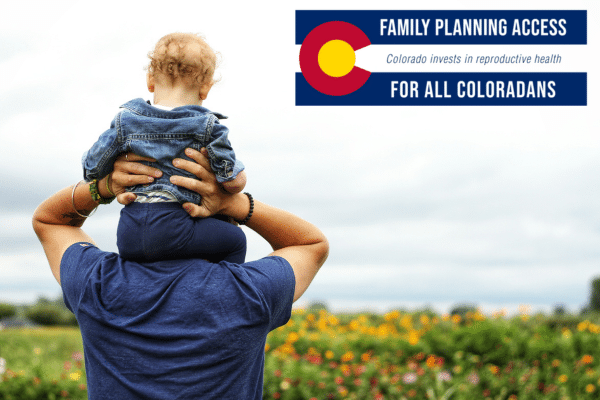
Together with reproductive justice and reproductive rights partners, the Children’s Campaign is working to make sure that Colorado takes steps to support critical family planning services in the 2023 legislative session.
While bans at the state and federal level prevent public funds from being used to expand access to the full range of reproductive health services, including abortion care, we must invest state funds in expanding access to family planning services. This will relieve some of the strain on the providers who offer a full range of reproductive services, ensuring ongoing access to family planning services for Coloradans across the state.
Having full agency over one’s own body is a fundamental human right. Pregnant women and people must be able to make the best decisions for themselves, their children, and their families. We believe in the right to maintain personal bodily autonomy, have children, not have children, and care for a family in safe, sustainable, supportive communities where the health, well-being and happiness of children is our shared highest priority.
Approximately 36 million people across the U.S. lost access to abortion care when Dobbs was issued. Colorado became one of few islands of abortion access in the region as a result. Led by our partners at the Colorado Organization for Latina Opportunity and Reproductive Rights (COLOR), the passage of the Reproductive Health Equity Act (RHEA) in 2022 helped solidify Colorado as this refuge. RHEA codifies the right for all Coloradans to choose or refuse contraception and ensures that every pregnant woman and person in Colorado has the right to give birth or have an abortion.
However, even in a state with legal protections, Dobbs harms birthing women and people. A sharp increase in the number of people coming to Colorado for essential abortion care that is no longer accessible at home is creating new burdens for pregnant women and people. It is testing and stressing our entire reproductive health and family planning system. According to our partners at Planned Parenthood of the Rocky Mountains, waitlists for all types of appointments – including family planning – have grown from a few days to a few weeks. Abortions in Colorado increased by 33% between April and August in 2022, with more than 40% of all abortions accounting for care of out-of-state patients. This is nearly double what was reported in 2020.
The burden of abortion restrictions is not shared equally. In Texas, where a large portion of Colorado’s out-of-state travelers come from, people of color comprise 59% of the population and 74% of those receiving abortions. People of color in Texas are more likely to have limited access to health care and effective family planning services due to a long history of racist and discriminatory health and socioeconomic practices.
Traveling hundreds of miles and several days to access abortion care is expensive, time-consuming, taxing, and in some cases, traumatic. White people and people with higher incomes have better access to these services, granting a greater degree of agency over those facing multiple barriers to access. Women and pregnant people seeking essential reproductive care should not be faced with the risk of losing work or child care that adds financial burden to an already-difficult experience.
Abortion restrictions impact families of color and families with low incomes in disparate, discriminatory ways. States with fewer restrictions around reproductive rights see lower rates of babies born at low birthweights. This benefit appears to have the strongest effect among Black women. Access to abortion care also has greater economic and educational benefits for Black women, who are more likely to lack access to contraceptive care due to the impacts of systemic racism and oppression. Ensuring that everyone can access responsive reproductive health care, including abortion, is part of addressing racial and economic inequities and advancing reproductive justice in the U.S.
The Children’s Campaign is committed to maintaining and expanding access to the essential health care that supports our state’s children and their families. This includes access to high-quality family planning services, reproductive health care, and abortion care. You can learn more about our reproductive health policy work on our website, and get involved by contacting Hunter Nelson, Policy Analyst, at hunter@coloradokids.org, or Erin Miller, Vice President of Health Initiatives, at erin@coloradokids.org.
We recognize and value the reproductive justice leaders across the state that have been leading this fight and building Colorado’s defenses for decades. Please consider supporting the work of the organizations below: